
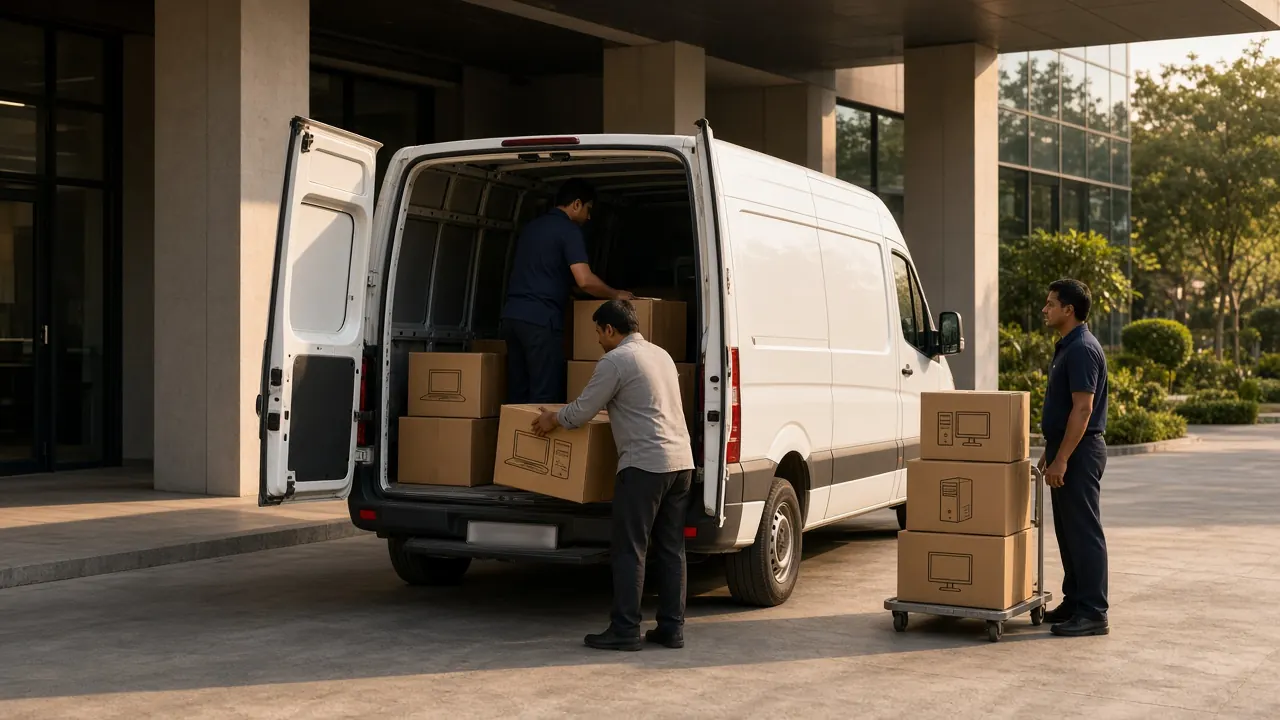
Many companies send every retired laptop, desktop and server straight to an e-waste recycler because it feels like the safe, compliant option. Others sell everything to the first buyer who calls. Both habits leave something on the table: the first loses resale value on working equipment, the second can leave items your policy says must be recycled with the wrong party. The better approach is to decide line by line.
What each route is for
| Resale to a business buyer | Recycling through an authorised recycler | |
|---|---|---|
| Purpose | Equipment goes back into use, whole or as parts | Materials are recovered and the rest is processed safely |
| Suits | Working, repairable and many non-working items with reusable parts | Items with no reuse value, or where policy needs a recycling certificate |
| Money | Buyer pays for the lot | Varies; some lots carry a charge, some are paid |
| Documents | Written quote, handover count, payment record | Recycler's own documents, which can include certificates |
| Data | Your own data steps before handover | Your own data steps, plus any destruction service the recycler offers |
What the e-waste rules ask of companies
India's E-Waste (Management) Rules, 2022 are the main rules for electronic waste. They define a bulk consumer as an entity that has used at least one thousand units of the listed electrical and electronic equipment at any point in a financial year, and they require bulk consumers to hand over e-waste generated by them only to a registered producer, refurbisher or recycler. The rules were notified in November 2022 and apply from 1 April 2023.
What this means for a particular company depends on its size, the equipment and how its compliance team reads the rules. Two practical points follow:
- Ask your compliance team which documents they need for each route before you start, not after the pickup. If your company is a bulk consumer, also ask them whether items being sold for reuse count as e-waste under your reading of the rules, and which kind of registered party they must go to.
- Ask every buyer or recycler what they are, and what papers they will give you. 2ndRaja buys used IT for resale. It is not an authorised or certified recycler and does not issue recycling or data-destruction certificates.
This guide is a practical summary, not legal advice.
Decide line by line
Go through your asset list and ask these questions for each line:
- Does it work, or could it be repaired? If yes, resale is usually the better first choice.
- Does your policy require a recycling certificate for this item? If yes, it goes to an authorised recycler.
- Is it broken but made of reusable parts? Laptops with dead screens, desktops that do not boot and servers with failed components often still have reusable parts. Offer them for resale first.
- Is it truly scrap? Crushed, burnt, water-damaged or stripped items, cables in bulk, and batteries that are swollen or leaking belong with a recycler.
Typical outcome by category
| Category | Usually resale | Usually recycling |
|---|---|---|
| Laptops | Working, damaged screens or keyboards, no-boot units with parts | Badly physically damaged shells, swollen batteries |
| Desktops and workstations | Working and most non-working units | Stripped or heavily damaged cabinets |
| Servers and storage | Working or partly working servers, storage, drive caddies | Damaged chassis with no usable parts |
| Networking gear | Switches, routers, firewalls, access points | Damaged units with no usable parts |
| Monitors | Working flat panels | Cracked panels, very old tube monitors |
| Printers | Working office and network printers | Broken, used-up consumer printers |
These are typical patterns, not fixed rules. Ask for a quote before deciding something is scrap. 2ndRaja quotes non-working and end-of-life items as part of the same lot. The full range is on our page about IT equipment we buy.
How to split one lot between two routes
- Build one complete asset list with condition marked on every line.
- Send it to 2ndRaja for a written quote, which comes within 24 hours of us receiving the list.
- Agree which lines are sold. Everything else goes to your authorised recycler.
- Run your data steps on everything with storage, whichever route it takes.
- Schedule the two collections, ideally close together, so the store room is cleared at once.
- File both sets of documents with the asset list so the whole disposal is in one place.
An example of a mixed lot
Picture an office clearing a floor after a move. The lot contains working laptops from the last refresh, older desktops that still boot, some laptops with cracked screens, a few servers from a retired rack, a box of tangled cables and keyboards, and two laptops with visibly swollen batteries. Sorted line by line, it usually looks like this:
- Offer for resale: the working laptops, the desktops, the laptops with cracked screens and the servers, each on its own line with condition marked.
- Send to an authorised recycler: the swollen-battery laptops, which need careful handling, and the loose cables and keyboards if the buyer does not quote them.
- Before either route: data steps on every laptop, desktop and server drive, under the company's own policy.
The result is one asset list, one quote for the resale part, and a much smaller lot for the recycler.
Questions to ask an e-waste recycler
- What authorisation do you hold, and can we have a copy?
- Which documents will you give us after collection?
- Do you charge for collection, or pay for the lot?
- Do you offer drive destruction, and what record comes with it?
Common mistakes
- Recycling everything by default. Working equipment loses its resale value the moment it is shredded.
- Assuming "non-working" means scrap. Many dead units still have value as parts.
- Forgetting data on items sent for recycling. Your data policy applies to every route.
- Not asking what a provider is. A buyer, a refurbisher and a recycler are different. Ask, and get it in writing.
For the full disposal process, read our guide to IT asset disposal in Hyderabad. Companies with many sites can see how we arrange pickups on our Hyderabad and Bangalore pages.
Key points
- Resale and recycling are partners, not rivals. Most corporate lots need both.
- Decide line by line: working and repairable items to resale first, true scrap and certificate-bound items to an authorised recycler.
- Many non-working items still have value as parts, so ask for a quote before calling anything scrap.
- Ask your compliance team, before you start, which documents each route needs.
- Your data steps apply to every route, including recycling.
Related guides
- IT Asset Disposal in Hyderabad: A Practical Guide for Offices
- What to Do With Old Company Laptops After a Refresh
Frequently asked questions
Is 2ndRaja an authorised e-waste recycler?
No. 2ndRaja buys used IT assets for resale and is not an authorised or certified recycler. We do not issue recycling or data-destruction certificates.
Will you buy items that we would otherwise send for recycling?
Often, yes. 2ndRaja buys non-working and end-of-life IT as part of the same lot. Mark the condition on each line and we will quote it.
Do the e-waste rules apply to our company?
The E-Waste (Management) Rules, 2022 place duties on bulk consumers of listed electrical and electronic equipment. Whether your company is a bulk consumer, and what you must do, is a question for your compliance team based on the rules.
Is resale better for the environment than recycling?
Keeping a working laptop or server in use for longer generally avoids making a new one, so reuse is usually preferred where it is possible. Recycling is the right route for items that cannot be reused.
Can we send one list for both routes?
Yes. Send the full list to 2ndRaja with condition marked. We quote what we buy, and you can route the remaining items to an authorised recycler.